Beforetheapocalypse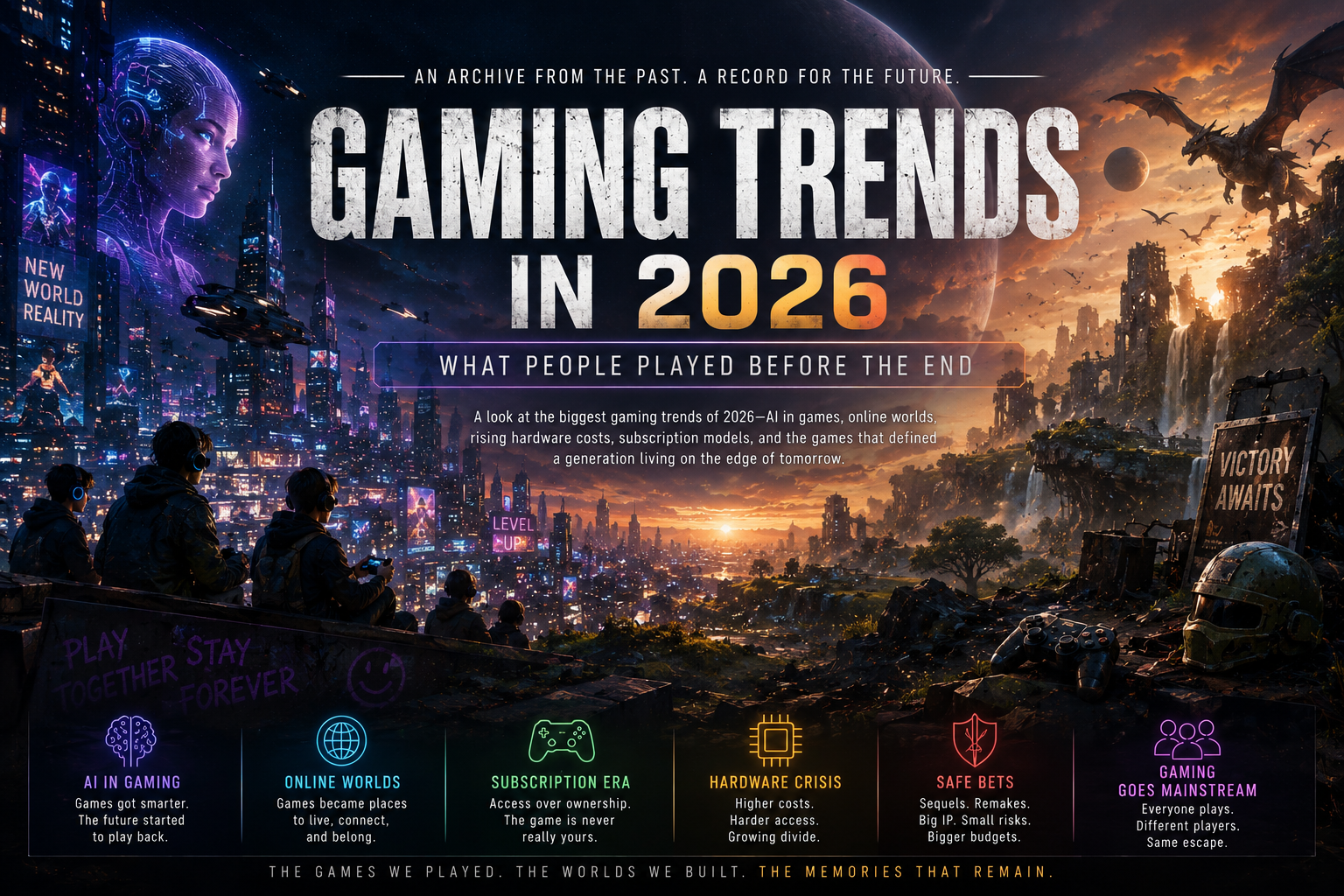
AI in Gaming (2026’s Biggest Trend)
One of the most important gaming trends in 2026 was the rise of artificial intelligence in video games.
AI was used to:
- generate dynamic storylines
- create realistic non-playable characters (NPCs)
- personalize gameplay for each player
Games were no longer static experiences. They adapted in real time.
Players didn’t just play stories—they influenced them.
From a modern perspective, this marks a turning point:
the moment when games began to think back.
Online Games Became Digital Worlds
Another major trend in gaming was the shift from standalone titles to persistent online worlds.
Popular features included:
- social hubs inside games
- virtual events and meetups
- player-created content and economies
For many, gaming became more than entertainment—it became a primary social environment.
People didn’t just log in to play.
They logged in to exist.
If you are researching “how online gaming evolved into virtual societies”, this period is essential.
Subscription Gaming and the End of Ownership
By 2026, the gaming industry had largely shifted toward subscription-based models.
Key changes:
- players paid monthly instead of buying games outright
- digital libraries replaced physical ownership
- access could be revoked at any time
This transition was widely accepted due to convenience.
However, it marked the quiet disappearance of a once-standard idea:
owning what you paid for.
Rising Cost of Gaming Hardware
A critical but less discussed trend was the increasing cost of gaming hardware.
Reasons included:
- global demand for high-performance computing
- competition with AI development industries
- supply chain disruptions
As a result:
- gaming PCs became more expensive
- consoles saw price increases
- entry barriers for new players grew
This reflected a broader shift: gaming technology was no longer the priority it once was.
Remakes, Sequels, and Safe Game Development
Game development costs reached extreme levels, leading to a surge in:
- remakes of older titles
- sequels to established franchises
- reliance on proven intellectual property
Innovation still existed—but it became riskier.
If you’re analyzing “why modern games rely on sequels and remakes”, this era provides a clear answer:
financial survival over creative risk.
Gaming Became Mainstream Culture
By 2026, gaming was one of the largest entertainment industries in the world.
Trends included:
- a global player base across all age groups
- increased diversity in gamers
- gaming as a shared cultural language
But alongside growth came a deeper purpose.
Players increasingly turned to games for:
- escape from reality
- social connection
- emotional engagement
Gaming was no longer just a hobby.
It was a default environment.
Final Analysis: Why Gaming Trends in 2026 Matter
Looking back, the gaming trends of 2026 reveal more than just industry evolution.
They show:
- a shift toward intelligent systems
- a movement into digital living spaces
- a growing reliance on virtual experiences
For researchers, historians, or anyone trying to understand pre-collapse culture, gaming offers a unique lens.
Because what people chose to play…
often reflected what they were trying to leave behind.